
Anyone seeking a luxury cruise beyond the large mainstream ships quickly arrives at two names: Ponant and Silversea. Both are regarded as synonyms for small-ship premium cruising. Yet treating them as interchangeable misses what really matters. The two fleets are more different than their shared market position suggests – in ship classes, travel style, onboard culture, and destinations.
At ivent-sailing we have worked with both fleets for years and know the ships from first-hand experience. In this comparison you will find no marketing claims, but the differences that genuinely decide a booking in our consultations – including one ship that is missing from most comparisons and yet forms a category of its own: the Paul Gauguin, a specialist for French Polynesia that likewise belongs to the Ponant family.
This premium all-inclusive cruise comparison sets out the differences between the luxury cruise lines of 2026 along the dimensions that genuinely matter for your decision: ship classes, onboard culture, languages, inclusions, suite standards, and signature programmes such as S.A.L.T. with Silversea and Smithsonian Journeys with Ponant. A direct Silversea Expedition vs Ponant Expedition comparison follows below.
Ponant vs Silversea at a glance
| Feature | Ponant | Silversea |
|---|---|---|
| Founded | 1988 in Marseille | 1994 in Monaco |
| Owner (as of 2026) | Artémis Group (Pinault) | Royal Caribbean Group |
| Fleet size | 13 ships | 12 ships |
| Guests per ship | 32 to 332 | 100 to 728 |
| Onboard language | French and English | English (German on many voyages) |
| Ship types | Sailing yacht, boutique, explorer, icebreaker, South Pacific | Classic, Modern, Nova, Expedition |
| Strengths | Expedition, French art of living, small ships | All-inclusive, suite comfort, worldwide route network |
| Atmosphere | cosmopolitan French | international elegance |
Which fleet suits you? We will give you current dates and availability – a complimentary 30-minute initial consultation.
Ponant: more than expedition
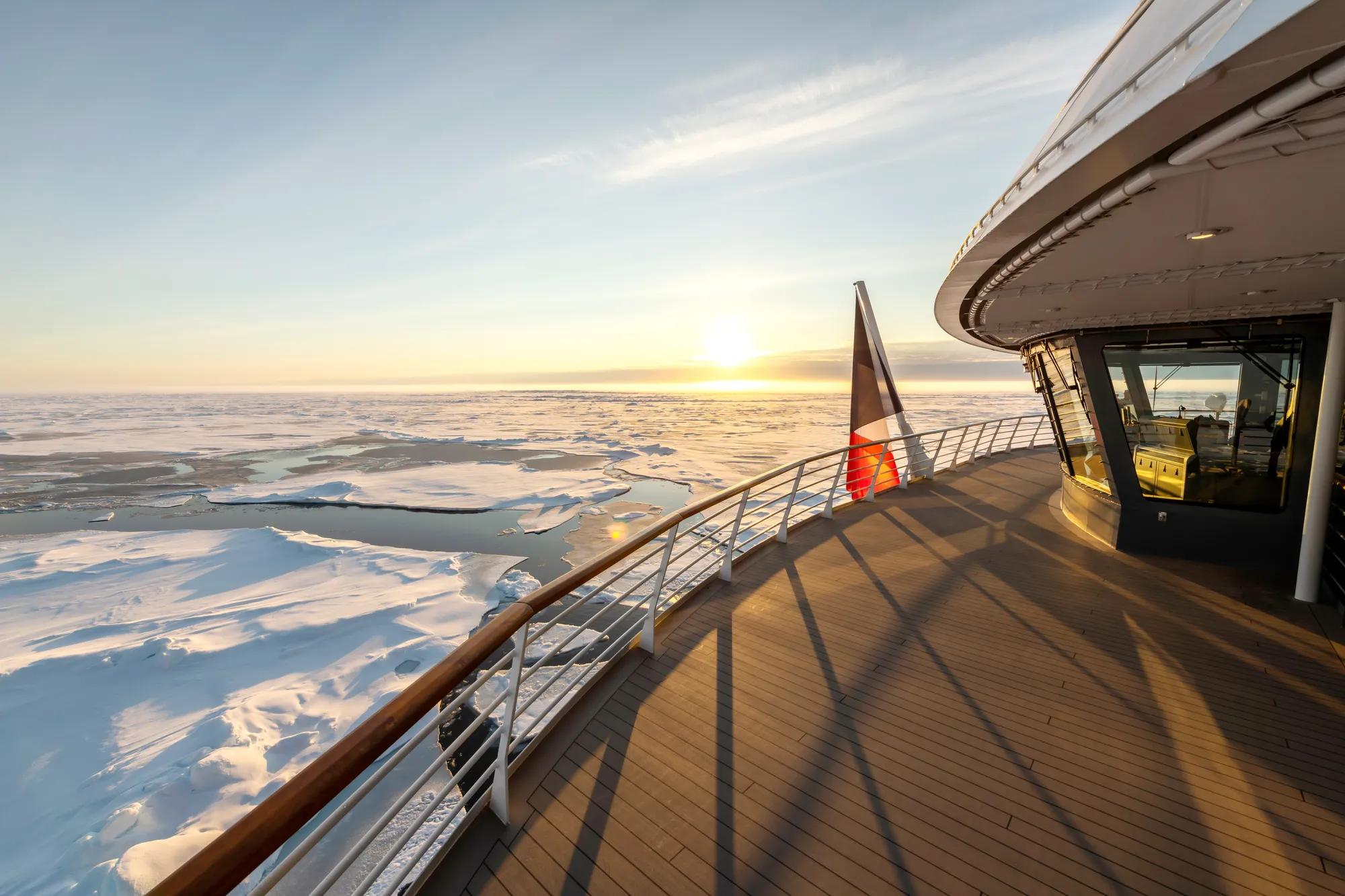
In the premium segment Ponant is often equated with expedition cruising. That falls short. The French fleet operates four distinct ship types covering almost the entire spectrum of upmarket cruising – from the intimate sailing yacht through classic boutique cruise ships to the heaviest civilian icebreaker in the world. In addition, the Paul Gauguin – a South Pacific specialist that fits none of those four categories – deserves a section of her own.
The four classes of the Ponant fleet
1. Le Ponant – the sailing yacht. The fleet’s founding vessel from 1991, 88 metres long, 32 guests in 16 suites, fully refurbished in 2022. Three masts, white sails, marina-level suites with private balconies just above the Mediterranean. More private yacht than cruise ship, with her own Beach Club and a crew-to-guest ratio that creates a genuinely private atmosphere. Cruising grounds: the Mediterranean in summer, the Caribbean in winter, occasionally the Indian Ocean.
2. Le Boréal, L’Austral, Le Soléal, Le Lyrial – the boutique sisters. Four identical boutique cruise ships from 2010 to 2015, each with 132 suites and 264 guests. They form the heart of the classic Ponant fleet and sail routes on which expedition is not the theme at all: Mediterranean classics, Norway, the British Isles, the Caribbean, transatlantic crossings. Architecture and interior design are by Jean-Philippe Nuel – understated, light, with marble, walnut, and a restraint that many guests describe as pleasantly French.
3. Le Lapérouse, Le Champlain, Le Bougainville, Le Dumont-d’Urville, Le Bellot, Le Jacques-Cartier – the Explorer class. Six identical sister ships from 2018 to 2021, each with 92 suites and 184 guests, certified to ice class 1C. These ships define what Ponant stands for today: compact enough for remote bays, ocean-going for transatlantic passages, equipped with a Zodiac marina and the Blue Eye – an underwater lounge that makes the sea audible through hydrophones and visible through bull’s-eye portholes. They sail from Spitsbergen via West Africa and the Marquesas all the way to Antarctica.
4. Le Commandant Charcot – the icebreaker. Launched in 2021, 149.9 metres long, 245 guests in 123 cabins (all with balconies), 215 crew, ice class PC2, dual-fuel hybrid propulsion (LNG + diesel + batteries). Classified by Bureau Veritas, built at Vard Søviknes in Norway. The world’s first luxury icebreaker in this class. She reaches the geographic North Pole, the Ross Sea, and the Antarctic Weddell Sea – destinations even classic expedition ships cannot attain. On board: two restaurants in collaboration with Alain Ducasse, a heated outdoor pool, a Snow Room. Anyone wishing to experience polar regions where tourism simply does not happen sails with this ship.
Le Commandant Charcot: the upcoming voyages with the luxury icebreaker – North Pole, Ross Sea, Weddell Sea – with dates, routes, and prices.
French art of living as the brand’s hallmark
What unites every Ponant ship is a cultural through-line: French cuisine, service with a European register, wine and cheese selections at a level rarely matched on American-influenced ships. The onboard language is French and English; some crew members speak German, which ivent-sailing arranges for German-speaking guests on many voyages.
Inclusions with Ponant cover open bars with a curated selection of spirits and wines, all restaurants, Wi-Fi, gratuities, and port charges. Premium spirits and rare vintage wines are not included – a deliberate choice that keeps the entry price point lower than Silversea’s.
Smithsonian Journeys: academic depth on selected Ponant voyages
One distinctive feature of the Ponant fleet is its partnership with Smithsonian Journeys, the travel programme of the Smithsonian Institution in Washington. On selected voyages – primarily on the sister ships L’Austral and Le Boréal, and on the Explorer class (Le Bellot, Le Champlain, Le Dumont-d’Urville, Le Jacques-Cartier) – Smithsonian Study Leaders sail with the ship: active scholars drawn from the Smithsonian network – historians, astrophysicists, art historians, anthropologists, or natural scientists, chosen to match the theme and region of each itinerary.
What sets these voyages apart from a conventional shipboard lecture series is their depth and authenticity: these are not generic onboard entertainers, but specialists who come aboard within their Smithsonian affiliation and deliver three to five lectures per week, accompany shore excursions, and remain available for personal conversation. Themes range from Antarctica (with L’Austral or Le Boréal) and the Saint Lawrence River (Le Bellot) to Madagascar with the Seychelles (Le Dumont-d’Urville), Indonesia (Le Jacques-Cartier), and the Hanseatic ports of the Baltic (Le Champlain).
One important note: the Smithsonian programme is in English. If you wish for German-language guidance, we can pair a Smithsonian voyage with additional German-speaking accompaniment on your chosen date.
Smithsonian voyages with Ponant: current dates with Smithsonian Study Leaders on board – Antarctica, the Saint Lawrence, Madagascar, Indonesia, the Baltic, and more.
Paul Gauguin Tahiti cruise: a class of her own in Polynesia
The m/s Paul Gauguin has belonged to the Ponant family since 2019, but holds an identity that fits none of the four classes above. A ship built for a single cruising ground, and continuously deployed there since 1997: French Polynesia.
At 332 guests, the Paul Gauguin is larger than the Explorer class yet smaller than any Silversea ship. Her decisive feature is shallow draught: she can anchor in shallow lagoons that remain closed to larger ships – directly off Bora Bora, in the inner lagoon of Rangiroa, or in the secluded bays of the Marquesas. A retractable watersports platform at the stern with kayaks, stand-up paddles, snorkelling equipment, and waterskiing turns the ship into a floating base for active travel in the South Seas.
What truly sets the Paul Gauguin apart is her crew. Les Gauguines and Les Gauguins – Polynesian dancers, singers, and storytellers – are aboard not only to entertain but to serve as cultural ambassadors. They accompany shore visits, interpret, and broker contacts with families on the remote islands. This is not a show – it is a relationship with the region built over decades, which on board feels tangibly different from any other Caribbean or Pacific cruise.
For whom does the Paul Gauguin make sense? For travellers who genuinely want to experience Tahiti, Bora Bora, the Tuamotu atolls, or the Marquesas, and for whom cultural depth matters more than the very last increment of suite luxury. Anyone wishing to explore French Polynesia on a ship that is permanently anchored to the region and holds the relevant permits – for the Cook Islands or particular Marquesas stops – will find no comparable offer on the market.
Silversea: suite comfort worldwide
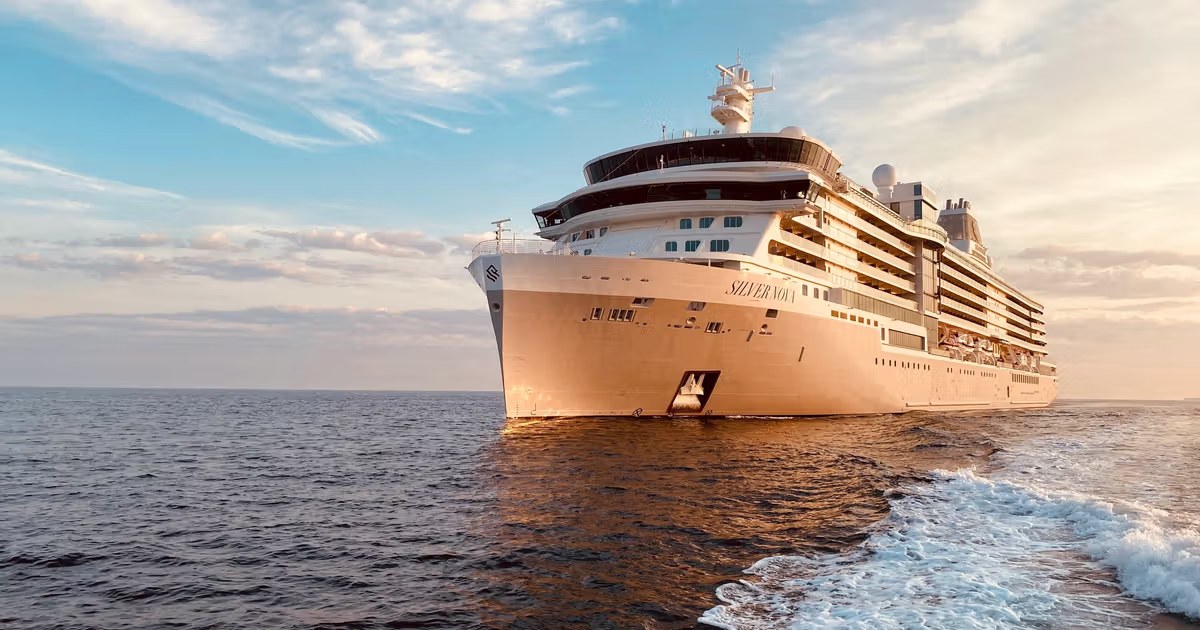
Silversea was founded in 1994 in Monaco as a family business of the Lefebvre family, has been majority-owned by the Royal Caribbean Group since 2018, and wholly owned since 2020. Under the new ownership the brand has retained its independence while benefiting in tangible ways – in port access and in the investment capacity for new ships such as the Nova class.
Unlike Ponant, Silversea is intentionally all-inclusive in the fullest sense: every spirit and champagne on board, every restaurant, butler service in every suite, Wi-Fi, gratuities, shore excursions on the Expedition ships, transfers in the home port, and optionally a Door-to-Door package (with flights and hotel nights). This depth of inclusions is hard to match in the premium segment and makes the end-of-voyage statement refreshingly straightforward.
The four classes of the Silversea fleet
1. Classic Class. The smaller ships of the fleet with a classic luxury character: Silver Cloud (1994, refitted 2017), Silver Wind (1995, refitted 2018), Silver Shadow (2000, refitted 2019), and Silver Whisper (2001, refitted 2018). Guest numbers between 240 and 388. These ships sail routes where size would be a disadvantage – the Adriatic, smaller Mediterranean islands, more exotic Asia itineraries. Silver Cloud and Silver Wind can also be configured as Expedition Class, which is why they are encountered in the Galápagos Islands, on the Amazon, and in the polar regions.
2. Modern Class. The main fleet for classic itineraries: Silver Spirit (2009, refitted 2018), Silver Muse (2017), Silver Moon (2020), and Silver Dawn (2022). Between 596 and 608 guests, every suite with an ocean view (most with balcony), eight restaurants per ship. The Modern and Nova class ships are home to the S.A.L.T. programme – a concept that deserves its own section (see below), because culinarily it plays in a league of its own among premium operators.
S.A.L.T.: the floating cookery school with route-driven DNA
S.A.L.T. stands for Sea And Land Taste and is not a conventional onboard entertainment programme but a complete cookery school that rebuilds its syllabus for every route. On an Adriatic voyage, guests learn Venetian fish cookery; on the Asia route, they work with Thai curry pastes and the Japanese art of knife technique; in the western Mediterranean, a Greek or Italian olive-oil sommelier opens the door to pressings that even seasoned Italy travellers have never met. The Modern and Nova ships are purpose-built for this – S.A.L.T. is not a pop-up activity in a lounge but has dedicated spaces of its own.
Four elements lift the concept into a category of its own:
- The S.A.L.T. Galley – a dedicated teaching kitchen on board, designed exclusively for cookery classes. Here guests work in small groups with local S.A.L.T. Ambassadors, chefs from the regions the ship is currently traversing, who join the vessel for the relevant legs.
- The S.A.L.T. Kitchen – a restaurant whose menu follows the region the ship is sailing through, day by day. Not generic “international cuisine”, but a culinary choreography along the route, often with ingredients bought the same day in the next port.
- The S.A.L.T. Bar – with spirits, wines, and liqueurs exclusively from the local region. On a Sicilian leg, Marsala and Amaro Averna take centre stage; in the Cape region, South African Pinotage and Chenin Blanc wines; in Mexico, Mezcal tastings instead of standard cocktail service.
- The S.A.L.T. Lab – workshops, tastings, and talks on subjects such as olive-oil tasting, wine pairing, coffee roasting, spice study, or fermentation – again, route-specific, and therefore different on each voyage.
The programme is supplemented by joint market visits with the ship’s executive chef, a route-specific cookbook that guests take home at the end of the voyage, and pre-shipped materials (recipes, background pieces on regional cuisine, a glossary of local ingredients). For gastronomically curious travellers, S.A.L.T. is, in our experience, the most substantive onboard programme in the entire premium segment – a voyage on which the cuisine genuinely becomes part of the travel motive rather than an accompaniment to the route. Anyone booking an Asia or Mediterranean voyage with S.A.L.T. leaves not only having seen ports, but having understood a region in culinary terms.
3. Nova Class. The newest generation: Silver Nova (2026) and Silver Ray (2026), each carrying 728 guests. Asymmetrical deck design with a 270-degree viewing point astern, hybrid propulsion combining LNG, fuel cell, and battery backup. The largest ship in the Silversea programme, yet the open architecture makes her feel less large than her guest count would suggest. For guests who want maximum comfort on classic routes without compromising on modern naval architecture.
4. Expedition Class. The Silver Origin (2020) operates exclusively in the Galápagos – 100 guests, five certifications for the marine reserve, a dedicated expedition team in residence. The Silver Endeavour (2022, formerly Crystal Endeavor) is Silversea’s polar ship for Antarctica, the Arctic, and Spitsbergen – 220 guests, Polar Class PC6, with the highest ratio of suite square metres per guest in her category. These ships compete directly with Ponant’s Explorer class, with the distinction that Silversea’s all-inclusive also covers shore excursions.
Personal consultation on S.A.L.T. voyages: Which route, which ship, and which season suit your culinary interest? We know the Modern and Nova class ships and the regional S.A.L.T. focus areas, and will advise you personally.
Suites and onboard comfort as the brand’s hallmark
What unites every Silversea ship is the suite standard. Sizes range from 33 square metres in the Classic Suite to over 200 square metres in the Owner’s Suite with two bedrooms. Butler service is not a premium add-on, but the standard from the smallest suite upward. This consistency in the suite concept is a key distinction from Ponant’s boutique class, where the suite concept is similar but the butler is not standard across the board.
Ponant vs Silversea head to head: where the differences lie
| Criterion | Ponant | Silversea |
|---|---|---|
| Ship size (typical) | 184–245 guests (Explorer/Icebreaker), 264 (Boutique) | 388–728 guests (Classic/Modern/Nova) |
| Inclusions | Bar, all restaurants, Wi-Fi, gratuities | Full all-inclusive incl. champagne, butler, shore excursions (Expedition) |
| Cruising focus | Polar regions, remote islands, Mediterranean in small bays | Mediterranean classics, Caribbean, Asia, world voyages, Antarctica |
| Architecture and style | restrained French (Jean-Philippe Nuel) | Italian elegant, opulent suite character |
| Language on board | French + English, some German | English, many voyages with German |
| Programme highlights | Blue Eye, Zodiac marina, French cuisine | S.A.L.T., butler, suite variety |
| Onboard culture | cosmopolitan, intellectual, quiet | international, lively, polished |
Which luxury cruise for which voyage? Specific recommendations 2026
From our consultation practice: the following constellations come up most often, and for each we have a clear recommendation.
Antarctica with maximum expedition character: Ponant’s Le Commandant Charcot for the Ross Sea or the Weddell Sea; the Ponant Explorer class for the Antarctic Peninsula; Silversea’s Silver Endeavour as a comfort-focused alternative with included shore excursions.
Galápagos: Silversea’s Silver Origin, without rival. Seven days, 100 guests, exclusive reserve concept.
French Polynesia (Tahiti, Bora Bora, Marquesas): the Paul Gauguin by Ponant. No other premium ship is permanently stationed in the region and so closely entwined with Polynesian culture.
Mediterranean with small bays and private character: Ponant’s Le Ponant (sailing yacht) for the intimate version; Ponant’s boutique ships for slightly larger parties; Silversea Classic class for routes where comfort and inclusions take precedence over size.
Classic Caribbean: Silversea Modern or Classic class. Ponant does sail Caribbean routes too, but is less at home there than in more remote cruising grounds.
World cruise or Grand Voyage: Silversea has the longer tradition here and the more mature programme. Several ships in the fleet offer a full circumnavigation or extended legs each year.
Arctic and Spitsbergen: both fleets are evenly matched at a high standard. Ponant’s Explorer class with the Blue Eye lounge and the French note; Silversea’s Silver Cloud Expedition or Silver Endeavour with the inclusive programme. For the most remote regions, our clear recommendation is the Le Commandant Charcot.
Asia (Japan, Indochina, Indian Ocean): Silversea offers the greater variety here; Ponant excels on routes combining small ports with rarely visited destinations.
Torn between several options? Tell us what you have in mind. We will be glad to advise.
What we at ivent-sailing particularly recommend
From our experience, there are a handful of combinations we recommend with particular conviction:
- Combination voyages Ponant + Paul Gauguin: an Antarctica leg on the Explorer class followed by a South Pacific recovery on the Paul Gauguin. Both ships belong to the same family, which simplifies booking and onward logistics.
- Silversea S.A.L.T. voyages with a culinary focus: we book S.A.L.T. voyages specifically for guests who wish to experience a floating cookery school with route-driven DNA – the programme turns a Mediterranean, Asia, or Mexico voyage into a genuine educational journey, in which you understand the region through its cuisine rather than merely visit it.
- Le Commandant Charcot to the geographic North Pole: one of the last truly expeditionary journeys still possible in a comfort format. An investment that endures, and one that for the right traveller holds the potential to be the experience of a lifetime.
- Le Ponant as a private charter: the fleet’s original sailing yacht can be chartered privately with 32 guests – ideal for family celebrations or small corporate gatherings.
Looking for something truly extraordinary? We would be delighted to help make your precious time at sea something truly memorable. Talk to us.
Frequently asked questions about Ponant and Silversea
Which onboard languages are spoken with Ponant and Silversea?
With Ponant the official onboard language is French and English in equal measure – announcements, lectures, and menus appear in both languages, and the crew predominantly speaks both. On many routes there are German-speaking tour leaders on board, particularly on the Smithsonian Journeys, which we can select for you specifically. With Silversea the onboard language is English; depending on the route mix, German-speaking staff at reception may be available. The Paul Gauguin in Polynesia operates bilingually in English and French. In every case we advise you ahead of booking which voyages offer German-speaking accompaniment.
What does a voyage with Ponant or Silversea cost?
Both fleets sit in the premium-to-luxury segment. A week in the Mediterranean on a Ponant Explorer ship starts at around 5,000 euros per person; Silversea Modern Class starts in a similar range. Polar voyages on the icebreaker Le Commandant Charcot start at around 18,000 euros per person, depending on the leg. Silversea Galápagos voyages on the Silver Origin begin at approximately 9,000 euros for seven nights including the shore programme. For your specific voyage we will advise you on the suite categories and the best available price.
Are there German-speaking voyages with Ponant and Silversea?
Yes, both fleets offer German-speaking voyages, though not on every ship or every route. We will advise you which dates feature German tour leadership or a German-speaking crew team on board, and arrange German-speaking shore excursions where required.
Which line is the better choice for a first luxury cruise?
For first-time travellers in the premium segment, we often recommend Silversea Modern Class on a classic route (Mediterranean, Adriatic, Norway). The clarity of the suite concept, the all-inclusive approach, and the international atmosphere make for an easy entry. Ponant becomes especially rewarding once travellers already have some experience and a French sensibility or expeditionary character is desired.
Which fleet has the better expedition ships?
Both have outstanding expedition ships. Ponant’s Explorer class (six ships, 184 guests) has the advantage of a larger fleet and consequently a broader range of routes. Silversea’s Silver Endeavour is the larger and more comfortable single ship, and her inclusive shore excursions are a meaningful argument in any all-inclusive comparison. For extreme polar voyages (North Pole, Ross Sea) Ponant’s Le Commandant Charcot stands alone in the market.
Can the Paul Gauguin only be booked in French Polynesia?
Essentially, yes. The Paul Gauguin has been permanently stationed in the region since 1997 and operates almost exclusively in the South Seas – French Polynesia, the Cook Islands, occasionally Fiji or the Marquesas. A small number of voyages per year reposition the ship as part of seasonal changes, for example to Hawaii or the US West Coast. We will keep you informed of the dates currently available.
Are gratuities included with Ponant and Silversea?
Yes, gratuities are fully included in the fare with both fleets. There is no additional service charge. An additional personal token of appreciation is, of course, entirely up to you. It is not, however, expected.
What is the S.A.L.T. programme at Silversea?
S.A.L.T. (Sea And Land Taste) is a complete cookery school on the Modern and Nova class Silversea ships. It comprises a dedicated teaching kitchen (S.A.L.T. Galley), a restaurant with a daily menu that follows the route (S.A.L.T. Kitchen), a bar serving only regional spirits (S.A.L.T. Bar), and a workshop space for tastings and talks (S.A.L.T. Lab). Local S.A.L.T. Ambassadors – chefs from the regions the ship is sailing through – join the ship for the relevant legs. The programme tailors its syllabus to each route and is regarded as the most substantive culinary onboard programme in the premium segment.
Our conclusion
Ponant and Silversea are not competitors that rule one another out – they are complementary. Anyone who loves the French art of living, appreciates small ships, and sees expedition as part of the voyage is at home with Ponant. Anyone preferring all-inclusive comfort, full suites in every category, and an international clientele will find their standard with Silversea. And anyone who genuinely wishes to experience French Polynesia will not get past the Paul Gauguin – a ship unique in the depth of her regional connection.
With us you receive more than marketing promises. We at ivent-sailing know all three worlds and advise you, on the basis of your destinations and preferences, on the truly distinctive experiences of specific voyages and on a worthwhile extension programme. Ask us about German-speaking accompaniment or onward logistics for combined journeys, and about the best current daily prices. With us you also receive insight into the sea conditions you can expect.
Talk to us. Let’s make your dream come true. Life is now.