
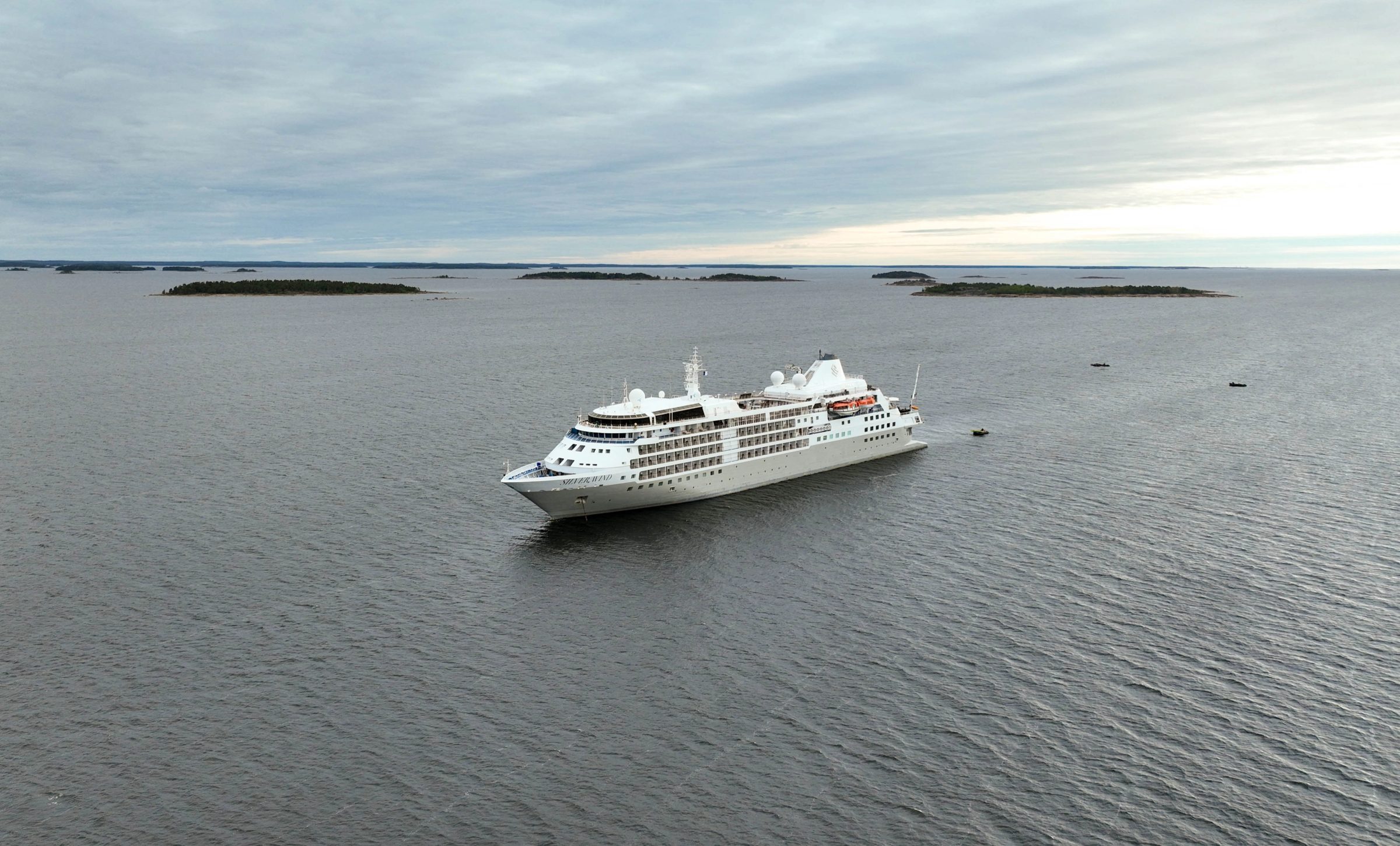
11 nights · 31. May - 11. June 2027 · Dublin → Rosyth (Edinburgh)
This eleven-night Celtic discovery voyage aboard Silver Wind Expedition from Dublin takes you to the northern islands of the British Isles and beyond. The route links Ireland's west coast with Scotland, the Hebrides, Orkney and Shetland, complemented by legs heading further north. Zodiac landings, naturalist-led walks and lectures shape the daily routine. Silversea offers premium all-inclusive with butler service in every suite, curated wines, Wi-Fi and gratuities included. Multiple restaurants and a well-equipped spa frame time on board.
Scroll along the route. Tap a port for details.
Dublin is the starting point for Ireland's wildest coastal landscapes …

In the Irish Sea between Britain and Ireland lies the Isle of Man as a British Crown Dependency with its own parliament Tynwald, the world's oldest continuously sitting parliament …
Largest of the uninhabited Treshnish Isles off the west coast of the Scottish Hebridean island of Mull …
Iona is a small island in the Inner Hebrides off Scotland's west coast and is regarded as the cradle of Celtic Christianity …
The Shiant Islands lie in the Minch between the Outer Hebrides and the Scottish mainland …
Sea loch on the north-west coast of Scotland in the Highlands, sheltered from the Atlantic …
Some 60 kilometres west of the Outer Hebrides in the North Atlantic rises St Kilda, Scotland's most remote archipelago …
Tórshavn is the capital of the Faroe Islands in the North Atlantic, on the east coast of the island of Streymoy …
Vestmanna sits on the west coast of the Faroese island of Streymoy in the North Atlantic …
Lerwick is the main town of the Shetland Islands in northern Scotland and sits on a sheltered natural harbour …
Between Shetland and Orkney lies Fair Isle, a tiny Scottish island in the middle of the stormy North Sea …
Lindisfarne, the Holy Island off the Northumberland coast, is reached across a tidal causeway at low water …
The Farne Islands off the Northumberland coast are one of England's foremost seabird sanctuaries, home to puffins, guillemots and Arctic terns …
In the Firth of Forth off Scotland's east coast lies the small Isle of May as a bird reserve with Scotland's oldest lighthouse from the 17th century …
Edinburgh is the capital of Scotland and lies on the east coast on the Firth of Forth …
On your signal we will hold your preferred suite for you, without obligation.