
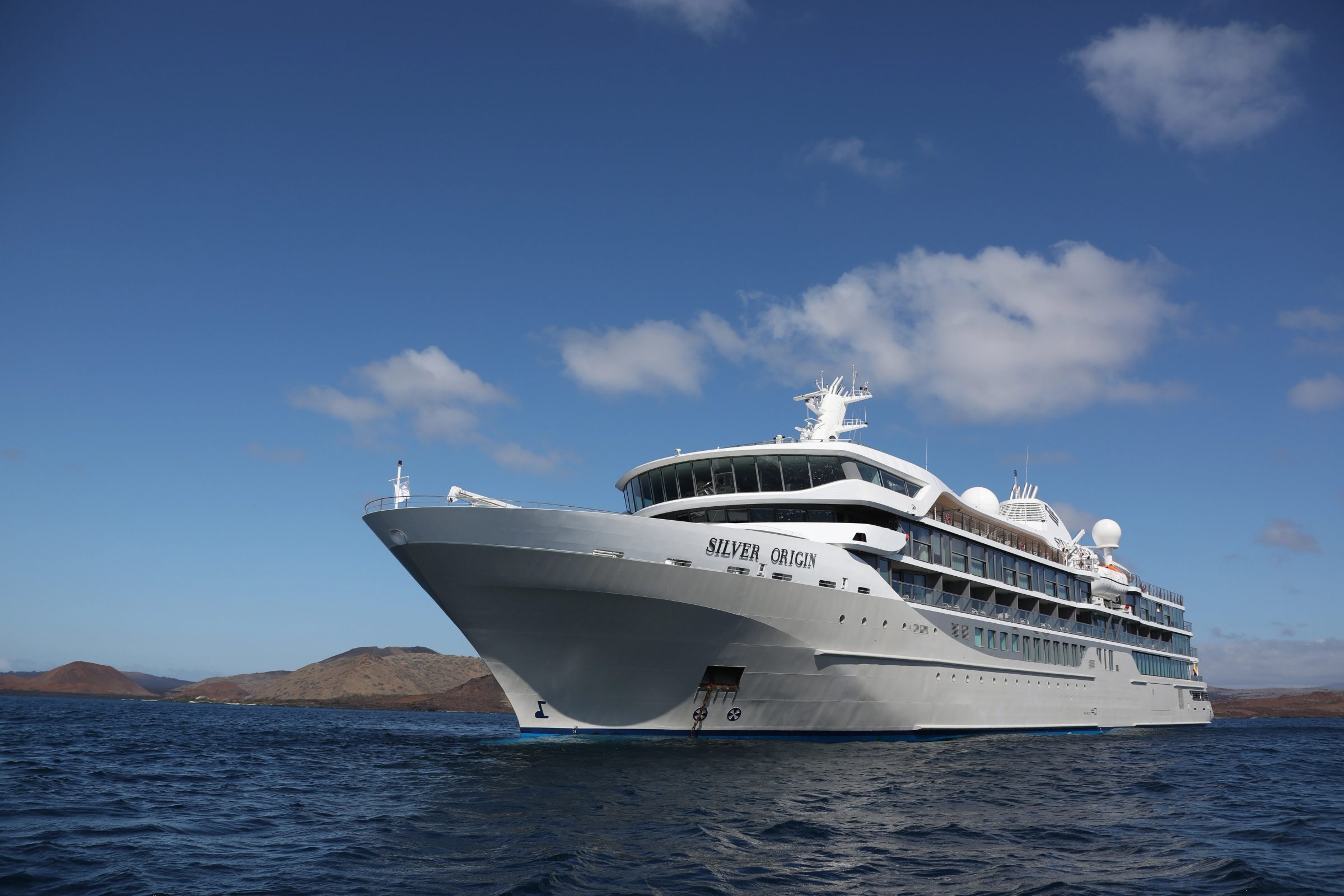
7 nights · 16. October - 23. October 2027 · San Cristóbal → San Cristóbal
Seven nights aboard Silver Origin through the Galápagos archipelago link geological highlights with the islands' unique wildlife. The 100-guest vessel sails between the volcanic islets year-round and provides an 18-Zodiac marina along with certified national park guides.
Scroll along the route. Tap a port for details.
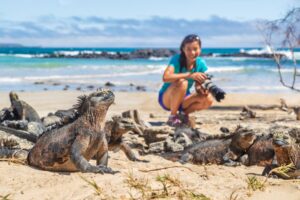
San Cristóbal is the oldest inhabited island in the Galápagos and home to the capital Puerto Baquerizo Moreno. First encounters with the Galápagos ecosystem: curious sea lions on the jetties, blue-footed boobies and giant tortoises in the national park.
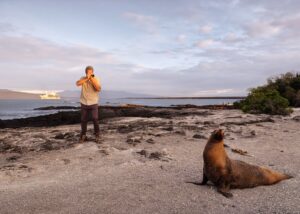
Kicker Rock (León Dormido) is a split volcanic cone rising from the sea near San Cristóbal. Hammerhead sharks, sea lions, Galápagos turtles and rays swim through the channel between the rocks - a diver's paradise.
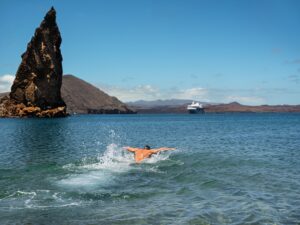
Bartolomé is the most photographed island in the Galápagos: Pinnacle Rock - a basalt spike rising from the sea - is the archipelago's iconic motif. Galápagos penguins, hammerhead sharks and sea turtles populate the waters.
This sheltered bay on the north-western coast of Santiago in the Galápagos once served buccaneers and whalers as an anchorage. Rust-red tuff cliffs and striking rock pinnacles line the shore, where sea lions, marine iguanas and seabirds gather.
Punta Vicente Roca lies at the northern tip of Isabela and offers dramatic cliffs with caves where blue-footed boobies nest. In the clear water below swim Galápagos penguins, sea lions and hammerhead sharks.
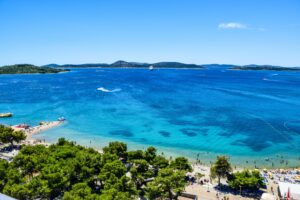
The Bolívar Channel separates the Galápagos islands of Isabela and Fernandina. The cold, upwelling Cromwell Current makes this strait one of the archipelago's richest waters, frequented by whales, dolphins, Galápagos penguins and flightless cormorants.
This headland on Fernandina, the youngest and most volcanically active island in the Galápagos, hosts one of the largest colonies of marine iguanas on earth. Across the black lava fields rises the La Cumbre volcano, and flightless cormorants, Galápagos penguins and sea lions share the shore.
Tagus Cove was for centuries a resting and watering place for whalers and pirates. Historic inscriptions on the lava rocks and a saltwater lake in the extinct volcanic crater make this place unique in Galápagos history.
Elizabeth Bay is a quiet, mangrove-fringed inlet on the west coast of Isabela. Galápagos penguins nest here in the lava caves, and manta rays and turtles glide through the crystal-clear water.
Post Office Bay holds a historic wooden-barrel mailbox from the 18th century. Today, ship passengers leave postcards and take with them any addressed to their home regions - a charming seafaring tradition that goes back to the whaling era.
Champion Islet off Floreana (Galápagos) is one of the last remaining homes of the Floreana mockingbird - a species Charles Darwin encountered on Floreana itself, where it has since gone extinct. Snorkelling and diving around the rocky island are first-class.
Punta Cormorant offers a green-shimmering olivine sand beach and flamingos in a brackish lagoon behind it. The name is misleading: there are hardly any cormorants here - but endemic giant tortoises of the Floreana subspecies.
The Santa Cruz Highlands are home to the El Chato tortoise reserve and free-ranging giant tortoises in their natural habitat. The lava tunnels - underground caves formed by lava flow - can be explored on foot. In the rainy season the highlands stay lush and green.
The breeding centre at the Charles Darwin Research Station on Santa Cruz raises Galápagos giant tortoises for reintroduction to their home islands. It was also home, until 2012, to Lonesome George, the last tortoise of Pinta Island.
Isla Guy Fawkes is a group of small rocky islets north-west of Santa Cruz, known for its abundant sea lion colonies. The name dates back to the British buccaneer era. Snorkelling here allows encounters with hammerhead sharks and rays.
San Cristóbal is the oldest inhabited island in the Galápagos and home to the capital Puerto Baquerizo Moreno. First encounters with the Galápagos ecosystem: curious sea lions on the jetties, blue-footed boobies and giant tortoises in the national park.
On your signal we will hold your preferred suite for you, without obligation.